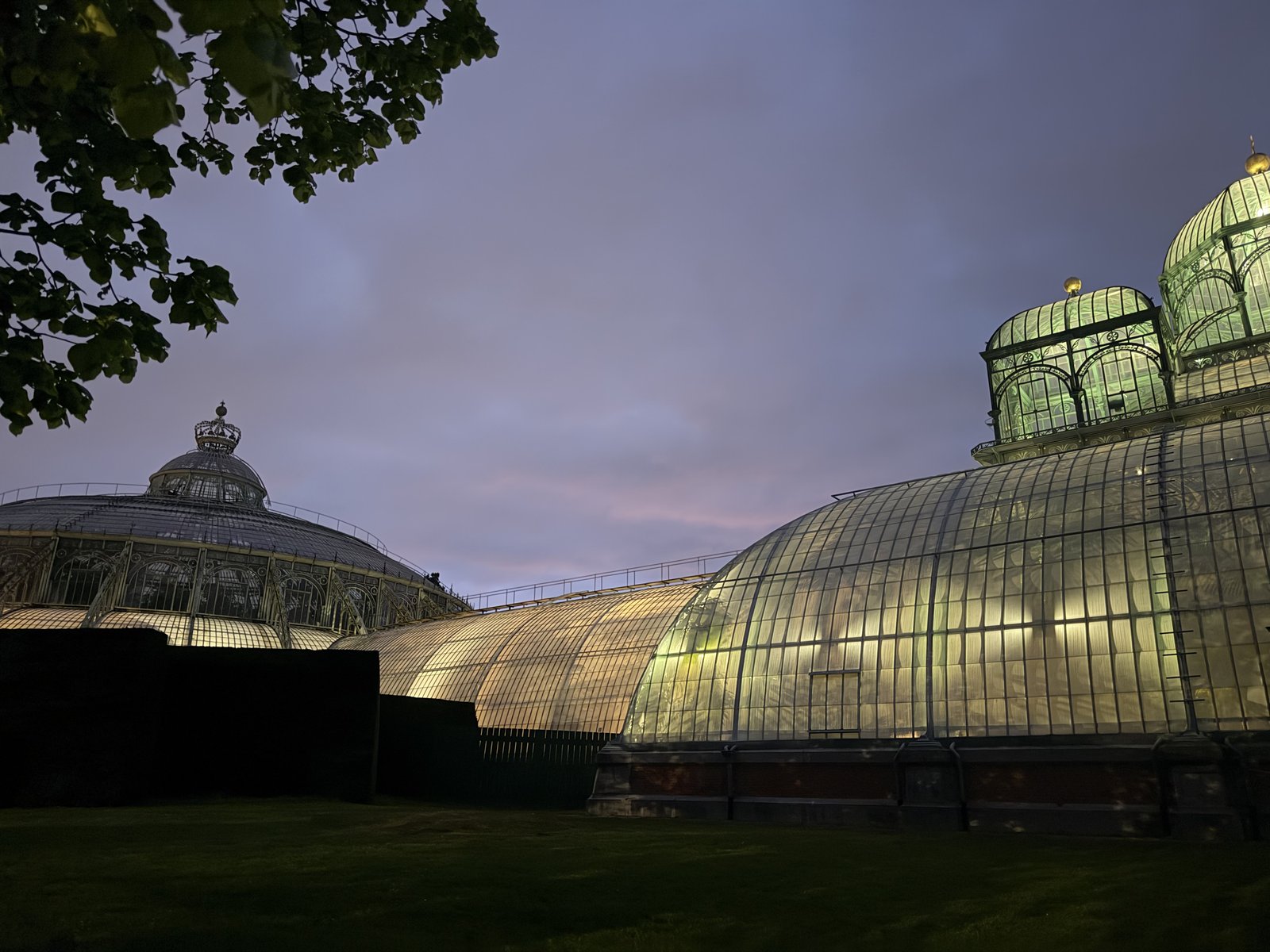
Royal Greenhouses of Laeken: Wheelchair Accessible?
The Royal Greenhouses of Laeken are a unique complex of glass conservatories built on the orders of Leopold II by architect Alphonse Balat. The greenhouses house an exceptional collection of exotic plants and are opened to the public for three weeks each spring. The glass complex is a masterpiece of 19th-century iron and glass architecture.
Important for wheelchair users: the standard visitor route is not truly accessible in practice. There are stairs between some greenhouses and several ramps are very steep — visiting independently is very difficult or impossible without a physically strong companion. Many passages are also narrow.
However, there is a dedicated day for visitors with reduced mobility: during the opening period, the Greenhouses organise one day specifically for visitors with limited mobility, with adapted routes, smaller crowds and additional assistance. This day is announced each year on the Monarchy's website. Reserve in advance.
Adapted toilets are available near the entrance. Disabled parking bays are available on the Koninklijke Dreef. The greenhouses are located in the grounds of the Royal Palace of Laeken, near the Atomium and Mini-Europe.
Good to know
- Reservation
- Online booking via the Monarchy's website is mandatory. The dedicated day for visitors with reduced mobility is announced separately and tends to fill up quickly, so reserve immediately when it goes live.
- Busy and quiet times
- The greenhouses are open for only about three weeks a year in April-May. Busiest at weekends and on sunny days; weekdays early in the morning are quieter.
- Things to note
- The standard route includes stairs between greenhouses and several steep ramps. Many passages are narrow, and an independent visit without a strong companion is usually not feasible outside the dedicated accessibility day.
- Visit tip
- Plan your visit on the annual reduced-mobility day for an adapted route with smaller crowds; combine with the nearby Atomium and Mini-Europe on the Heysel plateau, both with accessible entrances and parking bays.
Is this info still correct?
Accessibility info changes often: renovations, broken lifts, staff, temporary works. This entry is compiled from public sources and visitor feedback — if you spot anything that is incorrect, let us know. We update quickly.
Visited this place in a wheelchair? Share your experience
Similar locations
Historic gardens around the old asylum court in central Brussels, with a monumental setting and paved paths. Wheelchair...

Iconic 1958 structure shaped like an iron crystal, featuring exhibitions and panoramic views over Brussels. Partially...
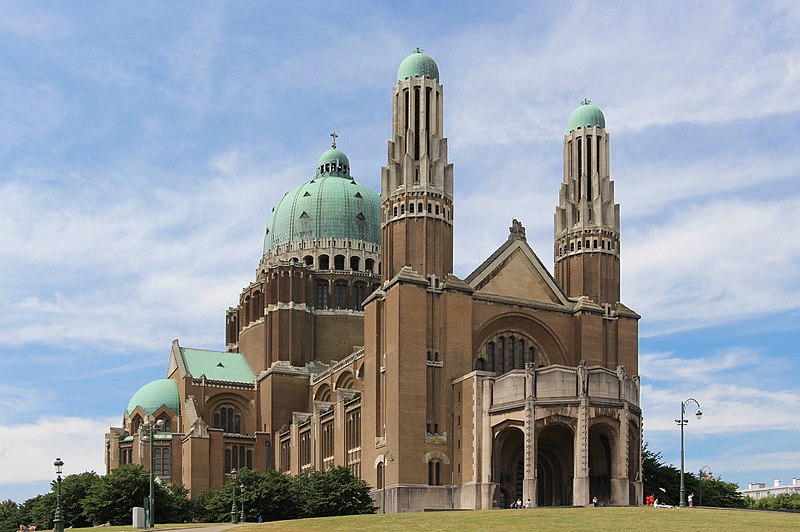
National Basilica of the Sacred Heart, the fifth largest church in the world, with panoramic views over Brussels....
Eat & drink nearby
Japanese-Asian restaurant near Tour & Taxis in Brussels with delicious food and helpful staff — partially accessible:...

Refined fish restaurant in the Radisson Collection hotel, with step-free access via the hotel lobby.
Iconic belle-époque café in central Brussels with a historic interior and a partially accessible room.